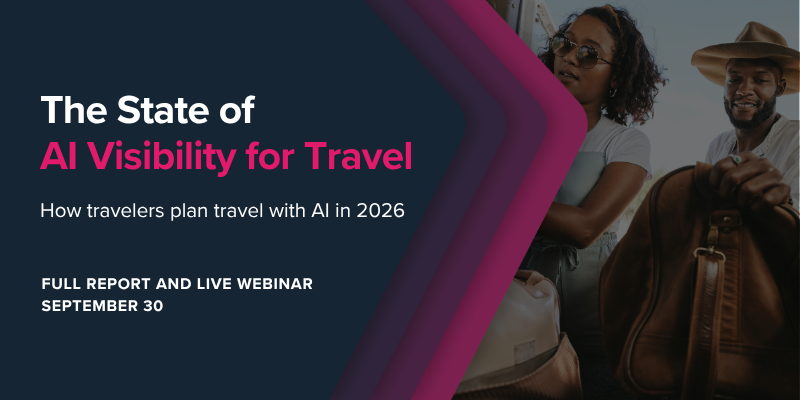

Travel Marketing AI Summit Sponsored by Propellic
.png)
We are taking the lead on the industry's most critical conversation.
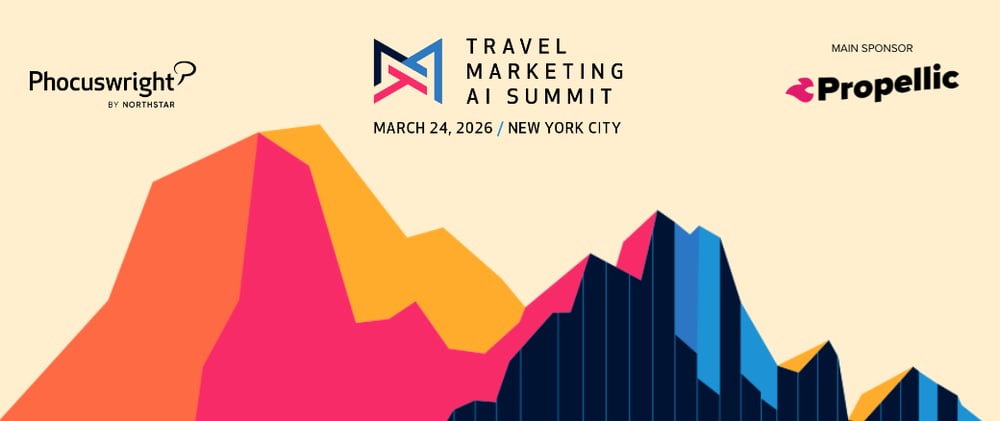
Propellic is proud to support the upcoming Phocuswright Travel Marketing & AI Summit in New York City on March 24th to drive the future of travel marketing.
Unlike typical conferences overloaded with hype, this summit stands out by focusing entirely on real-world application and high-level strategy. It is not a crowded trade show; it is a curated executive forum designed to cut through the noise.
What makes this event different?
- Fewer sessions, more meaningful conversations: A focus on clarity and impact over volume.
- Strategic, not just tactical: Designed for CMOs, Data Executives, and Strategists at the intersection of travel and technology.
- No product pitches: Just practical insights grounded in research and real use cases.
The agenda is built around meaningful exchange, featuring insights from the industry leaders actually deploying these technologies at scale:
- Nelson Boyce - Managing Director, Travel - Google
- Frederic Lalonde - Founder & CEO - Hopper
- Rahul Todkar - VP, Head of Data and AI - Tripadvisor
- Ben Harrell - Managing Director, United States - Booking.com
If you are a senior leader looking to define your 2026 strategy alongside the industry's best, this is the room you need to be in.
Exclusive NavLog Invite
Join us in exploring the future of AI in travel.
Use our private code to receive 20% off the prevailing ticket price.
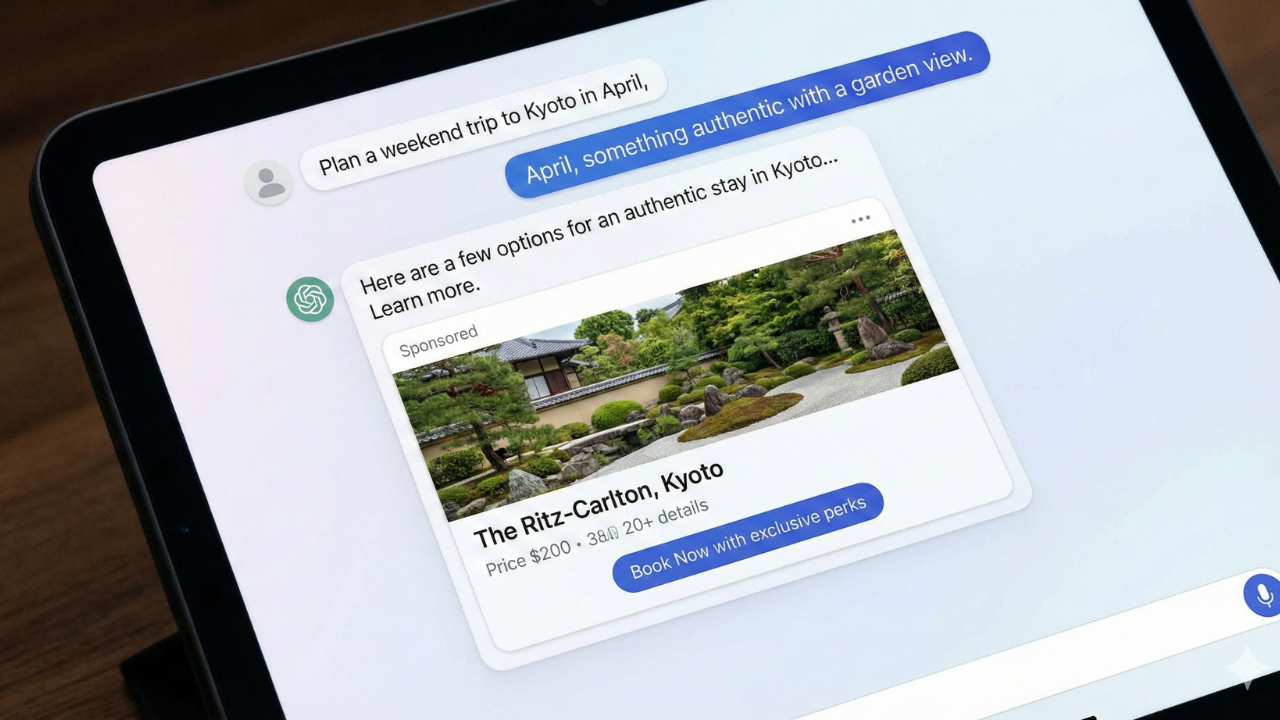
ChatGPT Ads Won’t Kill OTAs. But They Could Kill Direct’s Advantage.
by John Matson, Chief Revenue Officer @ Propellic
When OpenAI confirmed that ads are coming to ChatGPT, much of the travel industry focused on placement, labeling, and philosophical questions about AI influence. That conversation misses the point.
The more important shift is structural. ChatGPT ads introduce a new demand channel built on conversational intent, not search queries. And the brands that learn how to operate inside that environment first will define how value is captured inside it.
If history is any guide, Online Travel Agencies will move faster than most travel brands.
Direct booking has a real edge today
Early research in partnership with Phocuswright shows that nearly 80% of bookings driven by LLMs (Google AI Mode in this specific study) are currently happening direct, not through OTAs. That is an unusually strong signal in an industry where intermediaries typically dominate new performance channels over time.
This is happening because large language models tend to reward clarity and confidence over coverage. When a user asks for a recommendation, the model often surfaces brands it can explain cleanly - clear value propositions, recognizable names, straightforward policies, and simple booking paths.
In other words, LLMs currently favor brands that are easy to describe and easy to trust.
For hotels and travel brands, this has quietly created a window of advantage. Direct bookings benefit from brand familiarity, reduced friction, and the perception of authority when the answer itself feels personalized.
But this advantage is not durable on its own.
Conversational ads change the economics
Ads inside ChatGPT do not behave like display or social ads. They will behave more like search ads, but they sit adjacent to a moment of decision, inside a guided experience where the user has already expressed intent.
That environment compresses the funnel. There is less browsing, less comparison, and less patience for ambiguity. Performance matters immediately.
This is where OTAs historically thrive. They are built to:
- Translate intent into inventory instantly
- Test formats at scale with low marginal cost
- Optimize toward conversion rather than storytelling
- Accept short-term inefficiency in exchange for long-term learnings
Conversational AI doesn’t remove those advantages. It amplifies them.
Muscle memory is the real moat
OTAs did not win Google because they had better ads. They won because they built institutional reflexes early.
For example, Booking.com developed a sophisticated in-house experimentation platform that enabled thousands of concurrent A/B and multivariate tests across marketing and product. That capability allowed them to adapt faster than brands relying on slower decision cycles and external vendors.
Over time, OTAs learned how to:
- Interpret new signals before they were well defined
- Adjust bidding, creative, and landing paths weekly
- Feed platforms the data those systems implicitly rewarded
- Scale what worked faster than individual brands could react
That muscle memory compounds. Once a channel matures, late entrants are no longer learning the rules. They are playing inside them.
ChatGPT ads represent the beginning of that same cycle.
The channel is immature - but that favors early movers
It is still unclear exactly how ads will be placed, priced, or measured inside ChatGPT. Early indications suggest OpenAI is piloting with a limited set of partners rather than opening a fully self-serve marketplace on day one.
That uncertainty may cause some brands to hesitate. It shouldn’t.
Historically, the period of ambiguity is when the most durable advantages are built. Early partners learn how prompts map to outcomes, what types of inventory convert, and how conversational framing changes user behavior. By the time the rules are fully published, the playbook already exists.
OTAs are structurally incentivized to participate early, even when the economics are imperfect. Most travel brands are not.
AI tooling should help brands - but only if they use it
In theory, AI-driven product development should lower the barrier for brands to compete. Better tooling, faster experimentation, and more accessible insights should reduce the structural advantage intermediaries have traditionally enjoyed.
But tools do not create muscle memory. Practice does.
Brands that assume AI products alone will level the playing field without early operational investment are repeating a familiar mistake. The advantage does not come from the software. It comes from learning how to deploy it under real demand conditions.
Measurement will lag, but learning won’t
One of the reasons brands hesitate to engage early is uncertainty around attribution. That discomfort is understandable, but it is also dangerous.
OTAs are comfortable operating with imperfect attribution. In practice, they commit to a directional source of truth so decisions can be made quickly. They optimize on cohort behavior, assisted conversion, and long-term lift, while making investments into more sophisticated tracking tools like Media Mix Modeling (MMM) to understand incrementally caused by a new channel rather than directly attributed sales.
Many brands wait for clean dashboards before committing. In conversational AI, that hesitation is a competitive disadvantage.
The call to action for travel brands
This is not a moment for passive observation. It is a narrow window to build operational familiarity before the channel calcifies.
Travel brands should be doing four things now:
- Building muscle in adjacent paid channels while access is limited
If ChatGPT ads are not yet available, brands should be pressure-testing high-intent paid media now - search, metasearch, and upper-funnel formats where intent collapses quickly. The goal is not efficiency. It is learning how fast experimentation, prompt-adjacent messaging, and rapid iteration work in practice before LLM ads fully open up. - Doubling down on SEO and GEO to defend organic share
Brands should assume that organic visibility inside LLMs will remain meaningful, but increasingly competitive. That means investing in structured content, machine-readable differentiation, and authoritative signals that help models explain why a brand is the right answer - not just that it exists. - Strengthening AI-readable signals like policies, value props, and differentiation
LLMs reward clarity. Cancellation policies, inclusions, loyalty benefits, and experiential differences need to be explicit, consistent, and easy to summarize conversationally. - Reducing booking friction aggressively
Conversational demand punishes hesitation. Fewer steps, fewer surprises, faster confirmation, and clearer pricing are no longer UX optimizations - they are conversion requirements.
Because if brands do not build muscle memory around LLM-driven demand, OTAs will.
And once intermediaries define how conversational ads work at scale, direct booking’s current advantage will not disappear slowly. It will disappear all at once.
History has already shown how this story ends. The only open question is whether travel brands choose to act before it repeats.
Travel Brands Aren’t Overspending on Google, You’re Underestimating It
by Brennen Bliss, CEO & Founder @ Propellic
Booking and Expedia spent $5.2 billion on advertising together in Q2 2025. I think it's reasonable to assume the vast majority went to bottom-of-funnel paid search.
These aren't dumb companies. They know something the "diversify everything" crowd doesn't.
Travel has a multi-month research and booking process. That's according to Expedia's own data (check out their "Path to Purchase" research). Travelers spend months dreaming, researching, comparing. Then at the very end, they raise their hand and say "I'm ready to book."
That moment often - very often - happens on Google.
After working with what approaches 100 tour operators and travel brands, the realistic channel mix I see working is 70/30 or 80/20 (there it is again!). Seventy percent bottom-of-funnel paid search. Thirty percent everything else supporting it.
Not 50/50. Not "let's cut Google Ads in half this year."
The companies that try to force a balanced portfolio usually end up with worse performance across every channel. They spread budget too thin to generate statistical significance anywhere.
Does this mean you should ignore brand building, content, email, social? Of course not. Those channels warm up demand that eventually converts through paid search. They're the reason someone types your name into Google instead of a generic query.
But feeling guilty about your Google Ads spend? That's wasted energy.
The dependency isn't a failure of your marketing strategy. It's structural to how people actually book travel.
The real question isn't "how do I spend less on Google Ads." It's "how do I make sure every dollar I spend there captures demand I've already created somewhere else."
By the way - you can use media mix modeling to understand how your Meta spend impacts your overall outcomes - even if it's not directly attributable bookings. It may still be worth it!
WhatsApp Flows: Turn Travel Booking Into a Chat
.png)
by Soledad Rodriguez, Sr. Brand Marketing Manager @ Propellic
If you’re using WhatsApp for travel marketing, here’s what you need to know: WhatsApp Flows now let you build multi-screen, app-like experiences inside a chat - no web redirects, no drop-offs.
Instead of sending static templates or plain-text replies, Flows let your travelers:
- Book tours directly in WhatsApp
- Fill out passport/visa info
- Get real-time availability
- Submit feedback post-trip
These aren’t bots - they’re guided forms, dropdowns, and buttons that look native and finish fast. And that’s the point: Meta wants task-focused flows that take under five minutes.
Why It Matters for Travel
- Higher conversion: Fewer clicks, fewer drop-offs
- Better data: Structured inputs = cleaner CRM
- Lower support: Automate common tasks like itinerary edits or rebooking
- Ad-friendly: Run click-to-WhatsApp ads that launch flows instantly
WhatsApp Flows moves business messaging from chat notifications to native task journeys. For travel and tourism, that means better self‑serve bookings, richer customer data, and higher conversion rates - all inside the world’s most used messaging app. Investing now will future‑proof your customer engagement on the channel where your travelers already live.
Propellic Expands Executive Team for the Next Phase of Travel Marketing

To meet the demands of a rapidly shifting market, Propellic is significantly expanding our executive leadership team to deepen our focus on operational excellence and enterprise-level support.
- Jeff Johnson joins as COO. With over 20 years of experience scaling global agencies like NP Digital and iProspect, Jeff will oversee operations and service delivery to ensure efficient scaling and top-tier quality.
- John Matson joins as CRO. With a decade of deep travel leadership—including co-founding Voyager HQ and executive roles at Vacayou and a Google Sidewalk Labs spin-out—John leads revenue strategy to ensure measurable commercial outcomes for clients.
With these leaders on board, we are positioned to expand our capabilities and deepen partnerships for the next chapter of growth.
Conferences
Berlin, Germany | March 3 - 5
Let’s Connect
New York City, USA | March 24
Let’s Connect
Want To Level Up Your Travel Marketing?
Subscribe to the NavLog, our bi-weekly travel marketing roundup, where you’ll be the first to know about breaking news that impacts travel marketers and access exclusive performance marketing strategies and practical tips you can implement from the marketers at the leading edge of the travel industry.
.png)
.png)