
NEW RESEARCH
Which Travel Company Gets the Booking When an AI Agent Books?
AI agents can now book a trip on their own, from a text message to a confirmation email. Meta launched Muse in the US in September with travel booking built in, and Instinct, an invite-only AI agent people simply text, has reported that nearly half of its first $1B in transactions were travel.
When an AI agent picks the room and the rate, the brand that gets booked is the one it finds and trusts. So we set out to answer one question: now that AI agents are booking travel directly, how will this affect travel companies?
We ran 176 scripted booking requests through both AI agents, surveyed 217 recent users, and watched 22 users try a booking live. Agentic Travel Booking in Meta’s Muse and Instinct is out now, with 26 findings and six things travel marketers should know:
- AI agents build the shortlist far more often than they make the booking
- When travelers name a brand, the AI agent books that brand
- Travelers check the AI agent’s price before they trust it
- Most AI agent bookings route through intermediaries like Duffel
- AI agents rarely recommended tours on their own
- Make the approval step look like your own checkout
The numbers and the evidence behind each one are in the full report.
We also walked through the findings live with Brennen Bliss, our CEO, and John Matson, our CRO, and closed with four things travel companies can do now.
They’re in the full report, along with all 26 findings, every chart and screenshots from real Muse and Instinct conversations. The recording of the walkthrough is on the report page too.
SEO
Google Is Degrading Third-Party Search Data. Here’s How We Kept Ours Accurate.
by Eric Wimsatt, Associate Director of SEO @ Propellic

The Gist
→ Since mid-September, Google has returned altered results pages to automated requests, with nothing on the page signalling it.
→ Nozzle measured about 8% of collected pages as poisoned, against 0.17% before.
→ This doesn’t change how sites rank or what Search Console reports. It changes what every third-party tool can see.
Google has reasons to limit automated access to its results, and rate limits, IP blocks and CAPTCHAs are all reasonable. The difference with those is that you know you’ve been refused.
What Google has just implemented doesn't stop data collection, it corrupts it by serving altered results without any signal. The cost falls mostly on people using that data for ordinary work: a false ranking drop leads to a rewrite nobody needed, or budget pointed somewhere it shouldn’t go, and the error may never get traced back to where it came from.
Any ranking report built on scraped data now carries more noise than it did a few months ago. Confirm a reported drop in Search Console before acting on it, and it’s fair to ask your agency or tool provider where its search data comes from and how it’s validated. The answer should be specific.
We built our own research tooling rather than wait for vendors to adapt, and we benchmark it against Search Console on an ongoing basis. Eric’s full piece covers both changes, what they mean for brands, and what we replaced.
TRAVEL MARKETING PODCAST - NEW EPISODE
From Two Days To One Hour: Alex Galinos on AI Content Updates That Drive Bookings
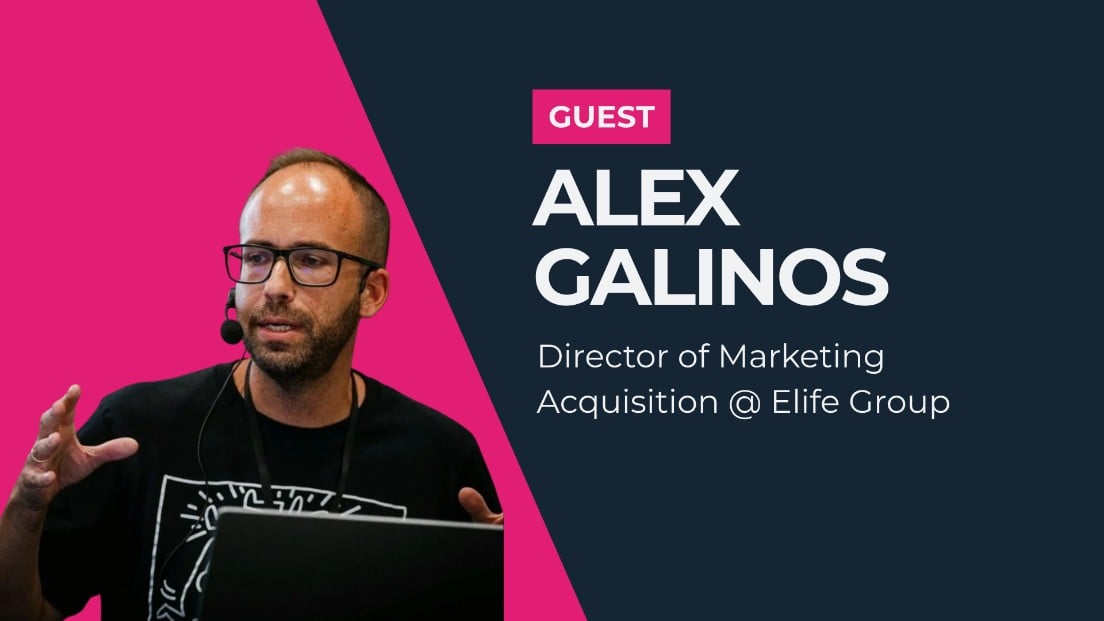
Brennen sits down with Alex Galinos, Director Of Marketing Acquisition at Elife Group, where he owns paid and organic acquisition for Hoppa and Elife Transfer.
Hoppa is a marketplace with thousands of destination pages, and a lot of them decay. Alex’s team used to spend close to two days refreshing a single one. Now a Claude Code workflow pulls the data, audits the page and decides what to add, cut or amend.
The whole update, from research to publish, takes about an hour, and that includes a content manager checking every page before it goes live. Across the 59 refreshed pages Alex measured, organic bookings went up 25% and organic revenue went up 20%.
In Alex’s words: “In order for anyone to be able to build a successful AI workflow, you have to have mastered the manual version of that workflow.”
What you’ll hear:
- How one owner across paid and organic catches the paid campaign pointed at a page nobody has updated since 2023
- Why he’d judge influencer campaigns on branded search, not bookings
- Organic first or paid first when entering a new market, and why roughly four to six months is enough to know
- What nine months of AI Overview tracking showed, including the 24% of AI Overview events GA4 attributed to direct
- Why he doesn’t use AI visibility tools
Alex’s advice for the next quarter is to stop pitching citations. Stakeholders don’t fund AI visibility. They fund bookings you can map back to it.
DISTRIBUTION
United Is Blocking AI Agents From Booking Flights, and a Hotel CEO Wants To Do the Same

The Gist
→ From November 11th, United blocks third-party AI agents from booking on its app and site, and bars travel agencies from using them for United flights.
→ MCR’s Tyler Morse told the Skift Commerce Summit he wants AI booking agents out of his hotels, because they don’t make impulse purchases the way people do.
→ Our own audit found the agents reached the payment step in all 176 runs, with nothing stopping them.
On November 11th, United became the first US airline to say it will block third-party AI agents from booking flights. Its explanation is security. Hand your account credentials to a third-party assistant and you might expose data, trigger a purchase you didn’t want, or watch MileagePlus miles disappear. There’s a regulatory wrinkle too: check-in requires a human to confirm there’s nothing banned in the bag, which an AI agent can’t do. Banks and retailers have been drawing the same line for a while.
The policy is broad. It covers bots, browser extensions, anything acting for a customer without permission, and it reaches travel agencies booking United flights on a customer’s behalf.
Tyler Morse at MCR skipped the security framing entirely. At the Skift Commerce Summit on the same day, he said he wants AI booking agents out of his hotels because they evaluate options more coolly than people do, which eats into upsell and impulse spend. He also admitted he hasn’t figured out how he’d enforce it. Worth noting that Skift checked 50 hotel brand sites and found only 10 saying anything about AI crawlers in robots.txt.
PhocusWire covered both alongside our report, and quoted Brennen: “I was surprised that in all 176 scripted booking requests, the agents navigated their way to the payment step on their own, with no captchas or login walls stopping them.”
Richard Clarke at T2RL framed the stakes on LinkedIn: “Whoever owns the moment an offer becomes an order usually owns the customer, the data and the margin.” Airlines have three options as he sees it: build an API for agents, do nothing and let the traffic run ungoverned, or block it the way United just did.
The channel being closed is still small. Two thirds of the conversations in our survey never got past research or a shortlist, and travel execs told roughly the same story on this quarter’s earnings calls. So blocking isn’t a terrible call right now, and United’s security reasoning is sound on its own terms. What it doesn’t account for is where consumer expectations are heading. When booking through an AI agent becomes normal, the airline that can’t be booked that way is the one the traveler skips, and United would be rebuilding access under pressure rather than on its own schedule.
Source: PhocusWire, 11 November 2026 · Skift, 11 November 2026
AI VISIBILITY
Business Hub Is Live in ChatGPT, With One Part Travel Can’t Use Yet

The Gist
→ OpenAI opened Business Hub in beta. Claim your business, keep your details current, and see how often ChatGPT mentions you.
→ Insights cover mentions, website clicks and the conversation topics where you come up. Not prompts, not user data.
→ Business Agents, the part that answers customer questions, are US ecommerce and online services only for now.
Anyone with a website can claim their profile, wherever ChatGPT operates, as long as you pass OpenAI’s eligibility checks. You verify you own the business, fill in your details, and a blue check turns up on your profile. If you’re on Shopify you can connect the store and your pricing and availability flow through on their own.
Business Agents are the one piece travel mostly can’t use yet. OpenAI has limited them to ecommerce and online service businesses in the US, so if you run a hotel, a tour company or a destination organization, that part stays shut until they widen it. You can still claim the profile and read the insights, and ChatGPT will go on describing your business in answers whether or not you have an agent.
OpenAI is unusually plain about what claiming won’t do. It won’t get you recommended more often, and the recommendations stay independent of who has claimed what. You don’t get to read the conversations either, yours or your agent’s, which rules out the prompt-level detail most AI visibility tools are built on.
The mention count is the interesting bit. Until now you’ve only seen AI visibility from the outside: a sample of prompts, plus whoever clicked through to your site. A first-party number counts every conversation.
Either way, claiming your profile never hurts. You can get your profile at chatgpt.com/business-hub, it’s free, and it takes a few minutes.
Source: OpenAI, Businesses in ChatGPT
Want To Level Up Your Travel Marketing?
Subscribe to the NavLog, our bi-weekly travel marketing roundup, where you’ll be the first to know about breaking news that impacts travel marketers and access exclusive performance marketing strategies and practical tips you can implement from the marketers at the leading edge of the travel industry.