How Batch Cracked The Code For Group Travel


Mike Petrakis, Co-founder & CEO of Batch, joins the podcast to discuss how they became the top app for planning group celebrations like Bachelorette parties. He dives deep into Batch's evolution from a commission-based Online Travel Agency (OTA) model to a "digital billboard" marketing engine for small businesses. In this episode, we cover the secrets to their B2C acquisition, how they leverage virality (K-Factor) , and their strategy for building a strong, well-positioned brand. Tune in to hear why Mike believes owning the customer is key in the age of AI and how Batch is building the "celebration economy".
Read MoreMike Petrakis
Mike Petrakis is the Co-Founder and CEO of Batch, the leading platform for planning group trips, with a focus on the Bachelorette party market. As a lifelong entrepreneur, Mike identified a major pain point in the travel industry: the logistical chaos of organizing group experiences. He co-founded Batch to solve this problem, creating an app that centralizes planning, booking, and payments, making the entire process seamless for users. Under his leadership, Batch has successfully dominated its niche and is redefining how groups celebrate and travel together.
Read More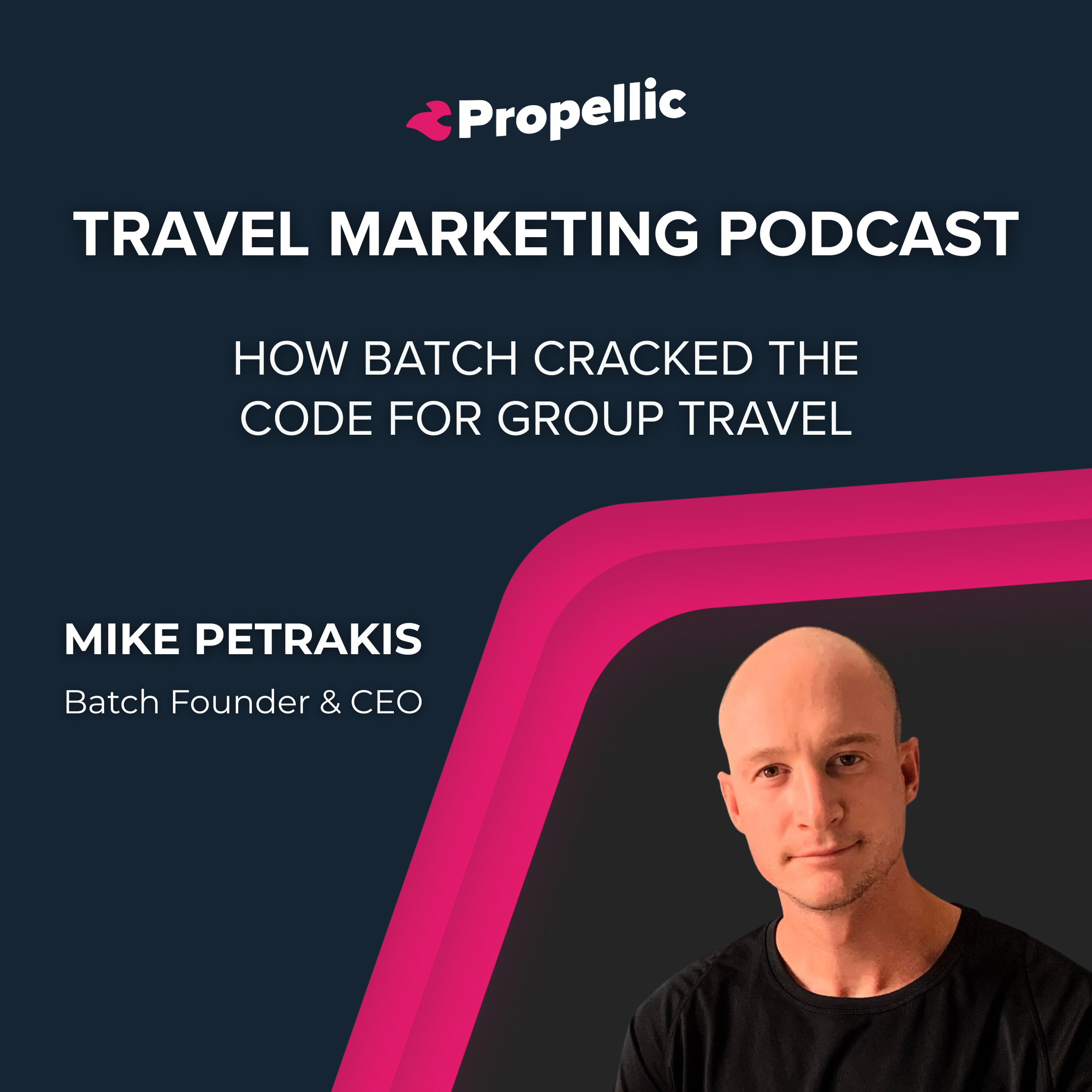
Transcript
Brennen Bliss: Well, hello there, Mike. Thanks so much for joining me today.
Mike Petrakis: Thanks, Brennen. Good to be here.
Brennen Bliss: It's nice to see someone who I've never met or talked to before on this podcast.
Mike Petrakis: Yeah, only hung out a few times, you and then spending basically half of next week together.
Brennen Bliss: Only a few times. Yes. Digital travel summit. I know this is getting published after that, but we, we, will, you will truly get sick of me over the next couple of days, which I, that is, I mean, not hard for me to create that outcome. But, this is going to be a fun one. I know that we just kind of had a little bit of a pre-show discussion, but, for those of you who are listening in the audience, Mike is the Co-Founder and CEO of a company called Batch so think of an OTA online travel agency, but specifically for parties and experiences around groups so just a brief background on Mike, definitely, a guy with an entrepreneurial spirit, just like myself and I'm excited to dive in.
You think Batch has become the, what number one app now for planning this type of party, Bachelorette or broad parties altogether? and it's a really interesting business model that's been evolving and changing. So I think one of the things that we're going to cover today is definitely going to be customer acquisition, but also the model as a whole.
Well, tell me about the idea of Batch.
So just to familiarize everybody with it, what is Batch? What are you trying to accomplish?
Mike Petrakis: Mm-hmm. Sounds good. Let's dig in.
Sure, so Batch is a group travel app. So if you're planning a party with your friends, we make it really easy because it's like herding cats trying to round up friends on a trip across, you we focus on North America, specifically in the US, we're in 85 markets, but you know, going back to the pain point, life is too short, man, just enjoy these celebratory moments with friends, right?
So the idea for Batch was very simple. It's just put utility together, you know, through a couple of different key planning features to make it really easy to plan a party, invite your friends, chat, put an itinerary together and split up the expenses. So it's taking the best of a few different apps and putting it into one place. Now you referenced OTA. I look at it as a marketing engine for all of the businesses that we work with because, you know, to capture it in building this audience of group travel planning users, we have a lot of predictive demand so we can kind of see where people are going on trips six months in advance.
So that's what led us to build a marketplace because we were like, wow, all these parties are going to Nashville and Vegas and Miami and Scottsdale. We should have all fun things to do, places to stay and dining for these different parties. So that's why we're building a group travel app with the marketplace layer on top. We started a niche first with Bachelorette parties as an entry point into what I'm defining and building as the celebration economy. So now we're seeing a lot of traction in birthdays, bachelor parties, girls trips and guys trips as well. Really fun business to build and it's cool that we've been partnering with you guys so you can kind of see the backstory to us and our growth as well.
Brennen Bliss: Yeah, definitely. One of our favorite categories to work with is startups and evolving with them. It's more interesting than, now, to set it and continue doing the same thing over and over just to keep things fun at Propell, like, we're still building pretty quickly. We're, I think, what, 25, 30 people now, it's been just like you, we've gone through a number of changes and pivots.
I wanted to talk about one of those key ones before we get into the marketing infrastructure. So, most travel marketplaces are funded by commissions and you look at a Viator, you look at Get Your Guide, you look at Booking.com, you look at, you know, Verbo and the customer sees a price and then a percent of that gets cut out and paid to the OTA and the rest gets distributed to the vendor or to the operator.
Mike Petrakis: Mm-hmm.
Brennen Bliss: You used to have that model, but it's changed. Can you talk about that?
Mike Petrakis: Yeah. Yeah, I'd love to.
So first off, we're a group travel planning app and you get your guide and Viator, our paid search arbitrage. They're trying to appear number one on Google, right? So we're building our own audience, right? So we sell access to that audience. Now what we found and what led to the business model pivot or evolution was that people use Batch as the place to plan a party and the place to find all these cool recommendations.
And you know, we can use this as our me releasing the case study, but we ran a study at the same at some point last year where we were like, you know, I think a lot of people are finding the cool party bus or the private or the hibachi chef and they're just going and booking it directly with the partner because we were seeing, you know, of the we did let's call it a five million in GMV at one point in Nashville. And we did a study and when we added up all the numbers of the amount of, you know, people finding us and going and booking directly with the partner, it was an incremental $15 million in one city that we were missing out on. And so as you might imagine, I freaked out, investors freaked out.
You know, we were like, all right, well, there's, there's two things we can do here. One is die. And two is you know, build a model that is a little bit contrarian where you're just saying, you know what, instead of trying to own the booking and shut the partners out and not be transparent, highlighting their business name, we're going to do the opposite. And, we're going to highlight these businesses, go to work for them, and be digital billboards for them. Because, you know, think about the future, right?
Looking at AI and, and how people get surfaced just like, you know what, our job is to just promote businesses really well because these are small businesses. They're boat partners. They're party buses that don't have time to market. So we're going to do this really well for them where they build the audience, retarget, insert lifecycle marketing, social media support, basically like an outsourced marketing agency because you don't want to pay for, you know, your social person and your paid acquisition person.
So we said, we're going to take this vision and run with it where you know, as a result of this new model, we're going to become a mark, a full blown marketing agency partner for these parts, for these partners and do this at scale. So that's the pivot that we executed about a year ago. And we've seen, you know, a lot of success thus far rolling into this model.
Brennen Bliss: Yeah, OK. So I'm going to just do like a very non sequitur transition from that over to the performance marketing side because it's interesting. This is when I start throwing wrenches that are not at all in the bullet point list that we talked about. So I'm curious. When you have a commission based model, you just talked about paid search arbitrage is something that you see the standard larger OTA is doing you on the other hand, not defining yourself in that way and building a completely different thing. have more flexibility in your model. It's not like spending a dollar, getting a dollar back. I'm curious how you figure out what you're able to spend on driving demand versus driving supply. Because the supply is paying you. Demand is not paying you.
Mike Petrakis: Mm-hmm. Mm-hmm.
Brennen Bliss: What do you think about that?
Mike Petrakis: We're super early days on supply paid acquisition. We're, I mean, dedicating small, like a relatively small portion, like 20 % of our marketing spend towards B2B acquisition. And so we're focused, you know, the majority of our focus is on party acquisition. We pay to acquire one.
Brennen Bliss: Yeah, and that's actually that's the part I'm more curious about is on the party acquisition side. When you're taking a commission, you know, you can spend up to just under the price of that commission and break even on a gross margin standpoint. But when you don't have a commission, how do you determine how much you can spend on B2B B2C acquisition?
Mike Petrakis: Yeah. Mm-hmm.
Yeah. We are back into unit economics, meaning, if a partner is paying you 200 bucks a month, what can you afford to spend on marketing towards that partner directly and how great of an ROI can you drive towards that partner? So the easiest way to think about it is if a partner pays us 200 bucks a month and they are, you know, 500, they get 500 bucks of booking, right?
And so if we pay $70 a month for that partner, how many bookings can we drive? Cause if we can drive two or three bookings a month and they're paying us 200 bucks and they're getting back a thousand or 1500 bucks, they're happy campers. Right? So it's really getting to the bottom of that model and looking at how that scale, looking at how that scales across different markets and different categories. That's how we formulated our unit economics for our paid acquisition strategy.
Brennen Bliss: Yeah. So, then noting that it's still, again, as you mentioned early days, we've seen this transition happen just in the past six months of working together. I'm curious, what metrics are you looking at to know that your B2C is working?
Mike Petrakis: Virality, mean, K-Factor, where we'll look at if we pay to acquire one lead user, does that user invite their friends to the party? You know, that's like a very straightforward one.
And then is that happening? That happens among Bachelorette parties. And then we're still focused on driving stronger virality across other party types, right?
So the next big thing for us is if we want to build the celebration economy, we can do that with all the businesses that we work with, but we really got to go deeper on building, you know, features that are going to attract birthdays and girls trips and, you know, bachelor parties as well.
They have different things they care about than just bachelor parties.
Brennen Bliss: It's interesting you talk about this K factor . and well, by reality factor broadly for those who are not familiar with that. And it's interesting because you, mean, like the contrarian nature of your business in travel is pretty visible. Like let's talk about the fact that your primary customer acquisition is through apps, through an app that you've built and your primary focus is driving to the app. So I imagine that was not an accident.
Mike Petrakis: Mm-hmm.
Brennen Bliss: Why is the app everything for Batch?
Mike Petrakis: Because you own your customer. Think about, you just published data yesterday or with Arrival about OTAs and Get Your Guide and Viator, and you're like, well, OTAs aren't dead yet. I'm betting they might be at a certain point in the next five years, right? If you don't own your customer, if you just try to, as I said, paid search arbitrage on Google.
We are trying to own our customer at the top of the funnel, and we had to go deep on building a world-class group travel app to do so, because otherwise, you're going to do the inverse of that, which is try to own the transaction. So for us, the debate was, well, do you just try to appear in all the LLMs when people search for Nashville Bachelorette Party, and then you surface a bunch of cool stuff from Batch and then we'll own the transaction?
Sure, that's one avenue to go, but the other is just to the customer from the top of the funnel. And that's where we're doubling down.
Brennen Bliss: Awesome. I think that's a, mean, speaking into that research, one of the things that we found, and this was Propellic, I think it took us three months to put this together and about 71,000 words interpreted from transcripts and hundreds of hours of recordings of people using computers. But one of the takeaways was Google's AI mode is not directing traffic to OTAs generally; it's going direct to operator and one of the considerations there is if you're an OTA, you really don't have control over that at all. And that, that could switch immediately and quickly, I mean, in, or against their favor. so, let's talk about.
Mike Petrakis: Exactly. Exactly. Exactly. I don't like being called an OTA. Like that was part of the switch last year because I don't like being called an OTA. I don't think of myself as one. I think we are a group travel planning app, you know, with the marketplace layered in. And when I think about that marketplace, it's just all we do is digital billboards for companies. That's what we do.
Brennen Bliss: And bookability is our experience still bookable through the platform?
Mike Petrakis: Yeah. So we have the top 20 or 30 % of our marketplace that is bookable with us purely because of ROI and attribution. It's just the easiest way for us to point our value add towards partners. However, we've had to do a lot of attribution work in the past six months as we roll it out, Batch Direct, right?
Which is just, just billboarding and driving traffic directly to the partner site, you know, and that was a big risk that we took, right? Just saying, Hey, go ahead, take the user, get all of their information, right? But we ran with it and we have been getting, we put pixels on a lot of different partners and we've been able to show our worth and the value add that we drive to the partners on this attribution as well.
Brennen Bliss: Yeah. Well, I think there's like two paths we can take. So, we can talk about B2B. We can talk about B2C. I'm thinking about the broader listeners of this audience and Propellix expertise around B2C and thinking that I would like to dive a little bit deeper into the B2C side. So if it's okay with you, I've got a couple of questions around that. Awesome. So performance marketing versus brand. The question, the age old question, how do you think about those? Where does your money go?
Mike Petrakis: Let's go.
Okay, so I'm going to look at, I'm going to do this on a P&L basis based on what we have told our board that we're going to do. So roughly, you know, we've been majority paid acquisition, I would say. So, we're trying to lower this ratio to be 60/40 or something like that, just to give a rough number. So when I say 60/40, I mean, we're going to spend 60 % of our, of our performance…
Brennen Bliss: Mm-hmm.
Mike Petrakis: …of our budget on performance marketing and 40 % on things that we do that we think will build brand and lead to longer term growth at Batch. Now that 40%, if you're curious, I'm happy to dig into.
Brennen Bliss: I am writing a note for myself to follow back up on this at the end of the conversation because I just thought of something. But in the meantime, yes, I do want to hear about the 40%.
Mike Petrakis: Great. Okay. So, parties go on trips every weekend in peak season. It's like 2,000 parties go on a trip to Nashville. And the only thing I care about is if I can get all of those parties to send in content from their trip. So right now, Batch gets about 200 to 300 different parties a weekend sending us content every single weekend, which is so cool because we can take that content.
Brennen Bliss: It's amazing.
Mike Petrakis: We put it on Batch Lens and it's like a TikTok shop, but for experiences and new features that we launched. And we use that to advertise all the businesses that we work with because you've published the data too now, UGC is what's going to drive the most eyeballs and bookings over, you know, partners trying to advertise themselves with other content.
So we're doubling down on UGC to build a brand. And over the next six months, you're going to see a lot of work in content creators to promote the businesses as well.
Brennen Bliss: Got it. Yeah.
Mike Petrakis: So those are really the two things that I care about when I think about org.
Brennen Bliss: So yeah, let's mean, that's a channel influencer think, on the, on the brand side, and on the, mean, a lot of this is theory, right?
Cause this is a movie you're currently making and you're working to diversify, which is very much in alignment with this concept of distribution diversification being core to a healthy travel company what is your approach other than just, I mean, so obviously when you talk about influencers, generally that social UGC is generally paid social.
Mike Petrakis: Mm-hmm.
Brennen Bliss: is the best practical application for it. Are there any other organic channels that you're looking at?
Mike Petrakis: I mean, we're looking at doubling down on GEO strategy as well. But again, I'll go back to the point, why do we exist? To make people's life easier was planning a party. So the number one brand builder or organic builder, better product. Just double down on building a much better product that makes it seamless to coordinate celebrations with friends.
Brennen Bliss: Better product. That's awesome. Put the customer first thing you always want. You'll usually win. Hopefully.
Mike Petrakis: We'll see. So far so good. We've got bachelorettes, we've got birthdays. Let's get everybody.
Brennen Bliss: Yeah. What's next? Like bachelors, birthdays and what's the rest of the market?
Mike Petrakis: I mean, look, every year 20, we got like 20% to 25% of the Bachelorette market in the U.S. uses Batch to plan a trip. It's a crazy number, right? So I'd love to do the same thing with batch parties next, right?
Brennen Bliss: Whoa.
Do you talk to me about that dynamic? Like, why has it been? Why have you been able to break into Bachelorette and not yet?
Mike Petrakis: I think because type A planners just use our app because it just makes life easier. And bachelors are like, just let me know where I need to show up and how much money I owe. You know, I think the…
Brennen Bliss: So this clearly introduces about getting into the travel agent space and saying, we'll plan it for you.
Mike Petrakis: Yeah, like I think I do think an agentic experience is like driven off of party types and personalization is very important because they have different things that they care about.
Bachelors, as I said, where do I need to show up and how much money do I owe bachelorettes every single detail of coordination, birthdays, RSVPs. That's the important thing for birthdays. You know, it's not an itinerary. It's a one night event.
So building all of, that's what I'm saying with the brand building is really just building hyper personalized experiences for all these different niche groups.
Brennen Bliss: Yeah, interesting on the UGC side of things, what type of user generated content has been working best for Batch?
Mike Petrakis: Short form video, that's a layup. You know, just 20 second videos that we can put on Batch Lens and on the product pages themselves. That's driving people who have video on product pages to get two to three X more views than people that do not. Just straight up.
Brennen Bliss: And, then just like coming back to, I'm kind of jumping around a little bit, but coming back to this concept of, of the virality factor, when you see, let's say Brennen is planning a bachelor party for his friend. I'm talking about myself and the third person for some reason, but we'll keep with it lett's say Brennen is planning a bachelor party for his friend and invites eight people to that. What, like, will those eight that I invite end up planning their own parties in the future? Are you seeing that happen frequently?
Mike Petrakis: Yes, that's the goal, right? So we're at like 20 % of Bachelorette parties. Like somebody from that party will come back and play in another party, which is amazing. That's virality 101.
We're trying to do the same thing with different party types. We have proven the model with Bachelorettes, know, top of funnel, virality, repeat usage. And now we're like, okay, great. How do we rinse and repeat this?
Brennen Bliss: Got it.
Brennen Bliss: Yeah.
Brennen Bliss: Well, I mean, it sounds like you're making good progress on birthdays too, which I know was not, I mean, that was a goal six months ago . so it's good to hear that you've broken into that a little bit more so on the influencer side, moving away a little bit from, from, UGC, what is the influencer strategy?
Mike Petrakis: Yeah, yeah. Mm-hmm.
I want content creators simply to just go on, you know, fun experiences with their friends. That's all I want to do. You know, very simple, like identify our top markets, cut it by party type. If somebody has a birthday, then I want to focus on New York and Chicago and LA.
If somebody has a bachelorette party, I'm going to focus on Nashville, Scottsville, Miami. And I want to identify content creators that are having one of those parties and can bring their friends on and have like a true authentic celebration and just share the content back with the partner and with us. That's all I care about.
Brennen Bliss: Yeah. Okay. Got it. Yeah. I think it's such a dynamic. It's such an interesting, you have, you have created a market that's unusual again in travel, or, or found yourself in or, or put yourself in, depending on how good you're feeling that day. I'm curious to loop back this is what I was writing down on this agentic user experience. So you mentioned that I would love to hear more about it.
Mike Petrakis: Mm-hmm.
Brennen Bliss: that everybody is obviously talking right now about that in the practical applications of AI and travel. Haven't seen a lot of really good outcomes yet. Are you going to be the person that changes that?
Mike Petrakis: Yeah. No, I think MindTrip is a cool example, and like GPT is a great example for people planning a trip. You know, I think the major difference between us and those and them is like, we're going to focus on utility and groups like the muck that they're, you know, if, if chat GPT goes to build a, or open AI wants to build a group travel app. That's, that would be a problem for us.
But I think for me, I'm just looking at like, Hey, we're going to do our own group travel planning. And the way that you do that is through personalization, right? So an agentic experience would look very similar to, you know, the chats that you have with chat, but it's going to be, okay, great. Here's a bachelor party and here's, you know, based on your preferences, your vibe. If you want to go, if you want to party with your friends and get super drunk, you should do XYZ itinerary.
Here's a template that works like add or drop things from this template. And then if you want to go golfing and have adventures and all that, then you're going to go here and here's an itinerary that you can drag and drop, you know, and, it's like, do you want to do this? Yes. Great. Okay. Here's the money, drop it in, split it with your friends. It's 10,000 bucks split 10 ways. So everybody put in a thousand bucks. So it's actually just tying together all of the recommendations, the vibe characteristics, and UGC that we've already built and just like just building a bunch of algorithms that are just like, okay, great.
Like this is going to be prime time for bouncer parties that want to party in Scottsdale, right? It's actually fairly straightforward because again, we're just so niche. Like we're just so focused on party types.
Brennen Bliss: Yeah, I gotcha.
Yeah, and that's interesting. So walk me through. So you've got bachelor parties, birthday parties, bachelorette. What else? Divorce parties. Is this like, hold on? Wait, wait, what was the last one?
Mike Petrakis: Divorce, anniversary, costume.
Costume. Like we see tons of different weird stuff, man. Yeah, like we see weddings planned on batches: a 500 person wedding that was planned on Batch this year. Yeah, I mean.
Brennen Bliss: costume party, my goodness. Did they split the price with everybody?
Mike Petrakis: Yeah, that's what I'm wondering. It's just, they're using it for mass communication. Actually, they used it for push notifications. Like when you can kind of be like, everybody come here now, you can just trigger pushes that make sense on Batch for like, you know, following on your itinerary if you really need people to pay attention. Yeah.
Brennen Bliss: Interesting. That's really interesting. I love that I want to talk a little bit more, so moving to a thing that you can talk about that not everybody on this podcast has the ability to talk about when we're talking just to someone who's within the marketing organization, it's building so remind me what, what stage of fundraising are you in right now?
Mike Petrakis: I mean, we've raised 30 million bucks, so we've raised B.
Brennen Bliss: Well, what is the series that you're on? Okay. So what I want to talk about is kind of like the, um, marketing team that you've been building from your earliest days and how it's evolved today.
Mike Petrakis: Mm-hmm. Mm-hmm. Much more scientific, much more data-driven. It would be a long story short.
Brennen Bliss: But I mean like people, like what are the roles that you've hired? How did you build the team out? What would you do differently?
Mike Petrakis: We're literally in the middle of upleveling. A natural thing that happens when you go from a very early stage to getting to be a mid-stage teenager is upleveling the talent of the team and re-shifting the focus. So we did pour a bunch of energy into content brand marketing and we're shifting that attention into product marketing, number one. So that means tying more closely our life cycle and social efforts to UGC gathering, getting vibe characteristics, like things that will fuel the beast of the app, you know, versus like, Hey, let's post, let's do like 300 blog posts about Bachelorette parties. Like we're less focused on that and more focused on doing things that will compliment a better user experience. So it looks much more technical and, and frankly, under the product org, that's like how we're layering in our new marketing.
Brennen Bliss: And then, so like when you look at the marketing that you work directly with, so like you're, you're at the operator level, you're, you're thinking about finance, about admin, about sales and marketing, about operations . when you're working with marketing as a part of your role, what is like the person that reports to you, what is their title? What's their experience level? Yes.
Mike Petrakis: Mm-hmm. The marketer specifically none of the I mean, they report to Sarah and he is the best example of like, he you don't look at rules being like a crazy brand creative. I don't look at him as being a crazy brand creative marketer. I look at him as being so deeply focused on data and performance marketing and unit economics and so strategic like.
Brennen Bliss: Thank you. Yeah, he's awesome.
Mike Petrakis: marketers now to me and Sarah and I were just talking about this are basically like a chief of staff like they are basically running your financial model and they're reporting in your Every Friday the demand side numbers and how that relates to the greater story of Batch.
Brennen Bliss: Mm-hmm.
Yeah, absolutely so Sarah's COO, right? Okay, very cool. So that's not an uncommon structure that marketing will go through. So I'm just curious. A lot of people, a lot of more senior marketers that are building teams will ask me, how do I build a marketing team? And I'd love to give that example for those who are in that stage of growth right now. a quick.
Mike Petrakis: Yeah.
Brennen Bliss: pivot with the time that we've got left. I want to talk a little bit about the B2B side just because it's interesting to me. So you've obviously moved to mode where you are getting paid a fee monthly by operators. How are you getting operators on the platform?
Mike Petrakis: Mm-hmm. Mm-hmm.
We started doing B2B ads and we've seen a lot of success with that, right?
So we have two different functions. One is B2B and inbound ads and one is just outbound efforts. So outbound is SDRs and offshore and testing agents, going and sourcing new leads and then putting a HubSpot funnel together like a CRM for . all of those leads.
And then the other is just simply running B2B ads and then converting them into paying subscribers as they come in. I am interested in doing both, but I love the traction. Last month we had 90 % of new subscribers who were actually inbound.
So that was awesome for me because it means that I'm going to double down on our content strategy by talking to partners, putting out case studies and basically like.
Brennen Bliss: Hmm.
Mike Petrakis: like showing people the value and the ROI that they get through Batch and just really propelling that inbound strategy. That's what I'm super interested in for the next 12 months.
Brennen Bliss: It's nice when you realize like that is the pure X like that is the most competence inspiring example of product market fit is when you get your business through inbound after all of the work that you put in.
Mike Petrakis: Yeah. I mean, look, man, been at it for six years and I feel like we figured out the right model and the right story to tell, which is like, we're going to own the celebration economy. And if you're a small business that caters towards this and like these guys think about it, how do they bucket themselves?
The party decoration services, you know, the beach picnics, like where is their home? You know, like we have been a great home for a lot of small businesses that want to cater towards this market.
Brennen Bliss: Yeah. And what just broadly like thinking, scaling out those six years that you're talking about when you started this, how different is Batch today from the initial vision?
Mike Petrakis: The model is a lot smarter. I mean, when we launched Batch, we didn't have, we didn't even have a business, launched in 2020 is just a planning app, first off.
In 2021, we had a marketplace of bookable stuff across three different cities, right?
Now we're in 90 cities with a completely different business model and the two big things that needed to happen to get to where we're at. And now we're like, like, I feel like a big weight has been off my shoulders. Can you open this up beyond just Bachelorette parties to all parties? So we did that in 2023.
And then 2024 is can you evolve a new business model that fits the needs of, know, that aligns well with the future, you know, with the way AI is going, LLM's and digital billboarding, marketing, you know, and that's, that was the next big hurdle. So this year we've had an awesome year of growth as a result of those two big things that we need to get done.
Brennen Bliss: Yeah, the evolution of a company is always fun to watch and always fun to be a part of. I think that the pattern I hear is three destinations, 90 and the next stop is world domination. Correct me if I'm wrong, but that sounds like the direction you're headed.
Mike Petrakis: I think there's plenty of room to grow in North America. I think it's ours for the taking if we double down on what we do best. Building a great experience for different parties that want to have a great time in the North.
Brennen Bliss: Yeah. And what is like, if you were to just summarize a couple of things or maybe even one, like what is a core thing that you believe is true about marketing and customer acquisition?
Like this is something that's unshakable in your mind, something you've learned and changes or alters or adjusts the way that you think about marketing. Is there anything you would put in that category?
Mike Petrakis: Everything's testing and learning. So that's like the obvious truth, right? There's no silver bullet into this. We've tried a bunch of different things. And, I think investing in product-like growth sooner, you know, and like, right now, I feel like we're having a Renaissance as a company where we're getting back to the basics of like, what's our K factor? How many invites were sent out like last, last week?
Like, and look, and just watching these metrics like a hawk week over week. And, and like how many downloads happen and you know, that's stuff that brings me back to the first year of Batch. That's so exciting, right? Like your K your basic KPI dashboard of what's going on in the business this week, as opposed to like, Hey, let's make a bunch of blog posts and try a bunch of different new stuff. Like I'm, I'm, I'm all about going back to the basics of what drives more virality to the product.
Brennen Bliss: That's awesome. That's awesome. I love that. I mean, it's such a fun category to be in and you clearly have a strong team, and are doing a lot of really exciting things. So it's been fun to be on this journey with you. I guess if, if there's keeping in, keeping up with what is going on with Batch, what's the best way for people to, to learn more or.
Mike Petrakis: Yeah, I mean, look, we're always looking to build out our team. So we're always hiring.
So follow me on LinkedIn, Mike Petrakis, and be on the lookout for new jobs or just reach out, send me a note there on LinkedIn, download Batch, check it out, go plan a party, you know, see what it looks like today, and then go download Batch in six months from now and see what it looks like then. And I want to talk about the differences between the two, you know, with you next year.
Brennen Bliss: And we'll do that. We can schedule it today. Well, thanks so much for joining me again. This was one of my favorites that I've done in a little while.
Mike Petrakis: Awesome, sounds good. Thanks for having me, Brennen.
Brennen Bliss: All right, thanks, Mike.